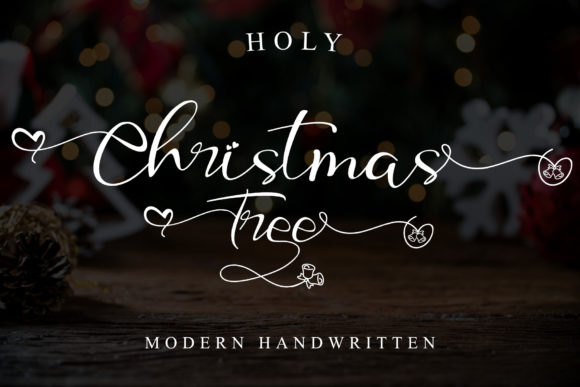
Holy Christmas Tree Font Review for Web & Brand Design
I was halfway through a late-night redesign of a boutique coaching website when I realized the hero section felt flat. The client wanted warmth, approachability, and a touch of holiday magic for their upcoming seasonal launch, but the standard sans serif headers just weren't delivering that emotional connection. That's when I pulled Holy Christmas Tree from my design assets folder to test it as a display font. Within minutes of swapping out the generic headline, the entire mood of the landing page shifted. It wasn't just text anymore; it felt like an invitation. This experience reminded me why choosing the right typeface is so critical in web design—it's the difference between a user scrolling past and a user stopping to read.
Holy Christmas Tree is a beautiful and natural handwritten font that brings a distinct romantic touch to digital interfaces. Sourced from Script Amp, this typeface stands out because it balances decorative flair with enough structure to remain legible on screens. Unlike many overly swirly script fonts that dissolve into illegibility on mobile devices, Holy Christmas Tree maintains clear character shapes while offering the organic flow of genuine handwriting. For web designers and UI creators, this means you can inject personality into hero sections, banners, and call-to-action areas without sacrificing the clean, modern typography standards users expect today.
Bringing Warmth to Digital Hero Sections
When testing Holy Christmas Tree in a real-world layout, I focused on its performance in large-scale applications. I placed it over a soft, textured background image for a course sales page header, pairing it with a clean, geometric sans serif for the subheadline. The contrast was immediate and effective. The font's natural strokes create a visual hierarchy that draws the eye directly to the main value proposition. Because it is a display font by nature, it shines brightest when used for short phrases, titles, and names rather than long blocks of text.
In this specific case, the font helped establish a brand identity that felt personal and curated. For online store owners or coaches, this kind of emotional resonance is invaluable. It signals to the visitor that there is a human behind the screen. However, readability is always the top priority in UX design. While Holy Christmas Tree performs beautifully at large sizes (48px and up), I would advise against using it for body copy or dense paragraphs. Its decorative nature makes it perfect for headlines, logo design elements, and pull quotes, but for the actual content of your blog posts or service descriptions, sticking to a simple serif or sans serif font ensures your users can scan information quickly and comfortably.
Mobile Responsiveness and Layout Considerations
A major concern when introducing a handwritten font into a responsive web design is how it scales down. Does it hold up on a smartphone screen? During my review, I tested Holy Christmas Tree across various breakpoints. The good news is that the character spacing and stroke weight are generally well-balanced. When used for navigation labels or small buttons, however, caution is needed. If the text is too small or the container too narrow, the intricate details of the script can blur together, especially on lower-resolution displays.
For mobile-first designs, I recommend reserving Holy Christmas Tree for primary headings and key visual accents. Avoid using it for form labels, footer links, or technical instructions where clarity is non-negotiable. In one test instance, I used it for a "Limited Offer" banner on a product landing page. On desktop, it looked stunning. On mobile, I had to increase the line height slightly and ensure there was ample padding around the text to prevent the ascenders and descenders from colliding with other elements. This attention to detail ensures that the font enhances the user experience rather than creating friction.
Strategic Font Pairing for Modern Websites
No font exists in a vacuum, and the success of Holy Christmas Tree often depends on what you pair it with. In my recent project, I paired it with a neutral sans serif font for the body text. This combination created a sophisticated editorial look that felt both festive and professional. The simplicity of the sans serif allowed the personality of Holy Christmas Tree to take center stage without competing for attention.
Alternatively, if you are designing for a more traditional or luxury brand identity, pairing this handwritten font with a classic serif font can evoke a sense of timeless elegance. This works particularly well for wedding portfolios, artisanal shop homepages, or lifestyle blogs. The key is contrast: if your display font is fluid and organic, your supporting typography should be structured and stable. This balance helps guide the user's eye through the page, ensuring that the decorative elements serve the content rather than distracting from it.
Technical Details for Web Implementation
From a technical standpoint, working with fonts from Script Amp is usually a smooth process, but there are a few things to check before deploying Holy Christmas Tree on a live site. First, verify the file formats included in your download. For web use, you will typically need WOFF or WOFF2 files to ensure fast loading times and broad browser compatibility. Slow-loading custom fonts can negatively impact your Core Web Vitals, so optimizing these assets is crucial.
Additionally, since Holy Christmas Tree is PUA (Private Use Area) encoded, this feature is primarily beneficial for crafters using cutting machines or design software like Cricut and Silhouette to access alternate characters and ligatures easily. For web developers, the focus should be on whether the font family includes multiple weights or styles that allow for flexibility in CSS. While this specific font leans towards a single stylistic weight, understanding its full character map is important if you plan to use special glyphs or alternates via CSS features. Always review the commercial font licensing terms carefully. If you are building a site for a client or creating a digital template for sale, ensure your license covers web embedding and commercial distribution.
Ultimately, Holy Christmas Tree is a versatile tool in a designer's kit. It excels in scenarios where emotion and aesthetics drive the design decision. Whether you are crafting a holiday campaign landing page, designing a digital brand kit for a creative entrepreneur, or adding a personal touch to a portfolio homepage, this font delivers a charming, romantic vibe that resonates with audiences. Just remember to use it intentionally—let it shine in the spotlight of your headers and banners, while keeping the supporting cast clean and readable. By respecting its strengths and limitations, you can create digital experiences that are not only visually striking but also user-friendly and effective.